
Contra Mundum


Christianity and Culture


Welcome to the culture pages
How to find material on this site.
Most material here is Spanish translations of popular articles that been contributed, but we have also tried to provide seminal books. Also on the Spanish side we have tried to give some sense of various attempts to present a (or some see it as the) Christian view of culture. These perspectives are rivals and somewhat in conflict with each other. We hope to help the readers to become aware of alternatives and to grasp the issues in contention. See the English tab above to find a general topical guide to material in English. There is very little in languages other than English and Spanish, purely because of the limitations of the people who have worked on this web site. For more recent material and from a more unified perspective, see: Via Moderna.Español
En Temas hay una variedad de listas por tema de material en este sitio. Perspectivas ofrece una guía de algunos de ellos agrupándolos bajo movimientos intelectuales generales que les dieron origen, y está construido para introducir estos movimientos. Los índices más completos son los que enumeran artículos y libros por Autores.Christian culture and the illusion of non-cultural spirituality
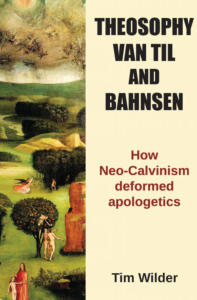
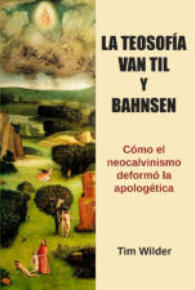
Christianity and Culture: it is no longer an uphill struggle to get people to pay attention. It is now open war. Everywhere there are publications and websites by church organizations newly forced to address the situation. Of course there have been those who for decades preached a pared-down gospel, and tried to only preach certain “theological” topics. Now that the culture wars have broken out around them it exposes what much of Evangelicalism always has been. The material here predates the current controversy over Christian Nationalism. There are now emerging what may become rival schools of thought about that nationalism, but which are not yet sufficiently crystallized that we are able to characterize and analyze them. Why this happened so late is a mystery. In the first print issue of Contra Mundum in 1991 we noticed that Gary North’s Christian Reconstruction was promoting an open borders, libertarian based ideology. This is the ancestor to one of the perspectives now opposed to Christian Nationalism. There now seems to be a pro-nationalist type of thought which does not seek to base the envisioned Christian state on any strict biblicist theology, such as theonomy. Others still seek a foundation in the historically defunct peleo-conservativism that does not demand the explicit Christian identity. There also is an evolving Kuyperian Christian nationalism, represented by such as Joel Webbon. In opposition is the left, but also various views invoking Kuyperian ideas. The problem with Kuyperianism, whether for or against Christian nationalism, is its own deep incoherence. The old consensus collapsed after the Thirty Years War, when it was evident that the old Aristotelian/Scholastic concepts could not create stability and peace, but had to be imposed by force, and on behalf of particular interests. In desperation Europe sought for new foundations, ones which included their own evident certainty. Thus, the Enlightenment was born. By his day, Abraham Kuyper saw that these new foundations fostered a militant atheism, that allowed no other explanation for reality. Reformed thought, Kuyper claimed, had stagnated since the mid-seventeenth century and offered no viable alternative to the Enlightenment. Kuyper proposed some alternative new foundations, but they were largely arbitrary notions of his own, and they have not worked out. Nevertheless several anti-Christian Nationalist perspectives, including that of Radical Two- Kingdom theology or of James White’s baptists, build on Kuyper’s notions (in particular the common-grace, i.e. natural law, covenant as the basis of society). On the other side Joel Webbon seems drawn between his early Kuyperianism and the attraction of the pre-modern Scholasticism.










© Lorem ipsum dolor sit Nulla in mollit pariatur in, est ut dolor eu
eiusmod lorem
Welcome to the
culture pages
How to find material on
this site.
Most material here is Spanish translations of popular articles that been contributed, but we have also tried to provide seminal books. Also on the Spanish side we have tried to give some sense of various attempts to present a (or some see it as the) Christian view of culture. These perspectives are rivals and somewhat in conflict with each other. We hope to help the readers to become aware of alternatives and to grasp the issues in contention. See the English tab above to find a general topical guide to material in English. There is very little in languages other than English and Spanish, purely because of the limitations of the people who have worked on this web site. For more recent material and from a more unified perspective, see: Via Moderna.Español
En Temas hay una variedad de listas por tema de material en este sitio. Perspectivas ofrece una guía de algunos de ellos agrupándolos bajo movimientos intelectuales generales que les dieron origen, y está construido para introducir estos movimientos. Los índices más completos son los que enumeran artículos y libros por Autores.Christian culture and the
illusion of non-cultural
spirituality
Christianity and Culture: it is no longer an uphill struggle to get people to pay attention. It is now open war. Everywhere there are publications and websites by church organizations newly forced to address the situation. Of course there have been those who for decades preached a pared-down gospel, and tried to only preach certain “theological” topics. Now that the culture wars have broken out around them it exposes what much of Evangelicalism always has been. The material here predates the current controversy over Christian Nationalism. There are now emerging what may become rival schools of thought about that nationalism, but which are not yet sufficiently crystallized that we are able to characterize and analyze them. Why this happened so late is a mystery. In the first print issue of Contra Mundum in 1991 we noticed that Gary North’s Christian Reconstruction was promoting an open borders, libertarian based ideology. This is the ancestor to one of the perspectives now opposed to Christian Nationalism. There now seems to be a pro- nationalist type of thought which does not seek to base the envisioned Christian state on any strict biblicist theology, such as theonomy. Others still seek a foundation in the historically defunct peleo-conservativism that does not demand the explicit Christian identity. There also is an evolving Kuyperian Christian nationalism, represented by such as Joel Webbon. In opposition is the left, but also various views invoking Kuyperian ideas. The problem with Kuyperianism, whether for or against Christian nationalism, is its own deep incoherence. The old consensus collapsed after the Thirty Years War, when it was evident that the old Aristotelian/Scholastic concepts could not create stability and peace, but had to be imposed by force, and on behalf of particular interests. In desperation Europe sought for new foundations, ones which included their own evident certainty. Thus, the Enlightenment was born. By his day, Abraham Kuyper saw that these new foundations fostered a militant atheism, that allowed no other explanation for reality. Reformed thought, Kuyper claimed, had stagnated since the mid-seventeenth century and offered no viable alternative to the Enlightenment. Kuyper proposed some alternative new foundations, but they were largely arbitrary notions of his own, and they have not worked out. Nevertheless several anti-Christian Nationalist perspectives, including that of Radical Two-Kingdom theology or of James White’s baptists, build on Kuyper’s notions (in particular the common-grace, i.e. natural law, covenant as the basis of society). On the other side Joel Webbon seems drawn between his early Kuyperianism and the attraction of the pre-modern Scholasticism.
Christianity and Culture




- Home
- About
- subjects
- French
- Temas
- Auteresindice
- Autores-org
- Autores-a
- Autores-b2
- Autores-ij
- Autores-d
- Autores-ef
- Autores-g
- Autores-h1
- Autores-c
- Autores-k
- Autores-l
- Autores-m1
- Autores-no
- Autores-pq
- Autores-r1
- Autores-r2
- Autores-b1
- Autores-h2
- Autores-s1
- Autores-s2
- Autores-t
- Autores-uv
- Autores-w1
- Documentos
- Perspectivas
- Eng-biblical
- Eng-law
- Eng-law-reviews
- Eng-education
- Eng-arts
- Eng-history
- Eng-economics
- Eng-biography
- Eng-brown
- Spa-recon
- Spa-anglicanos
- Spa-arte
- Spa-cosmovision
- Spa-iglesia
- Spa-pacto
- Spa-refeurop
- eng-federalism
- Spa-economia
- Spa-posreformados
- Spa-milenio
- eng-collections
- spa-etica
- spa-comun
- spa-epistemologia
- spa-t-historia
- blog
- spa-educacion
- spa-politica
- spa-filosofia
- portugues
- spa-reino
- spa-escolasticos
- eng-scolastics
- spa-neocalvinismo
- eng-neocalvinism
- espanol-libros
- sobre